Is it normal to feel like a different person after having a baby?
In one word - yes. And believe me when I say that you aren’t the only person wondering this exact point.
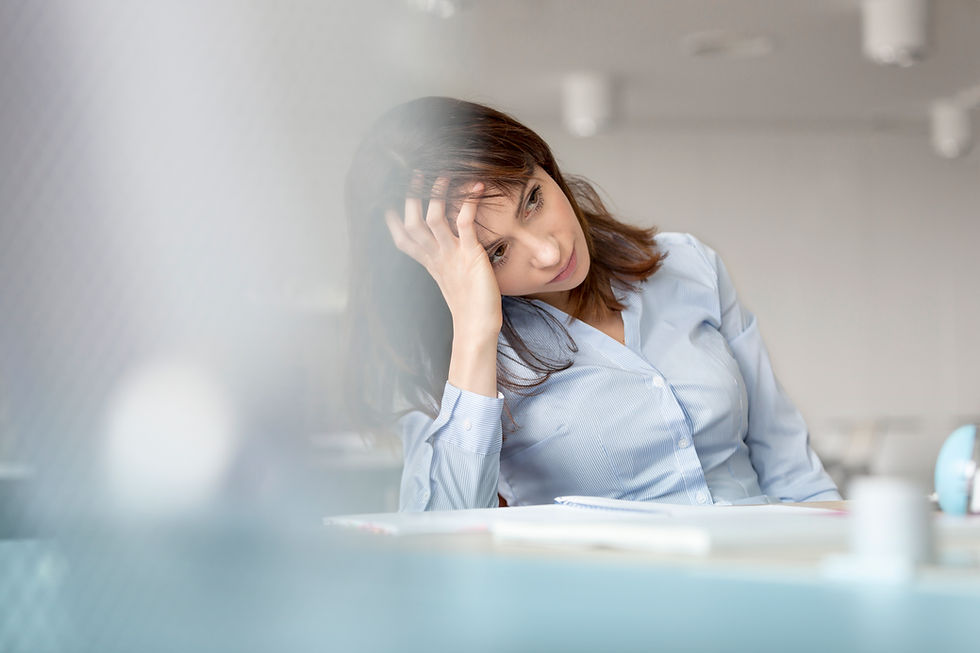
You’re lying wide awake in bed at 2am after the baby has finally gone back to sleep. A thought drifts into your head that you can’t quite shake. ‘I don’t feel like me anymore.’ Not in a dramatic, oh my god what’s happening way. More like a sense of quiet unease. A sense that the person you were before — the one who knew what she wanted and had a plan, who felt confident and had a clear sense of who she was — has been replaced by someone you don't fully recognise.
And the strangest part? You can't pinpoint when this change happened.

It’s not just ‘mum brain.’ What you are feeling isn’t a hormonal blip that will sort itself out after a good night’s sleep (whenever that happens). It’s not the baby blues. It’s not just tiredness which is causing everything to feel foggy.
It's a genuine identity shift. And it's so common that researchers have a name for it — matrescence. I wrote about the science behind it recently, but the short version is this: your brain physically changes during pregnancy and after birth. The parts that handle your sense of self get turned down, and the parts focused on your baby get turned up. So when you say ‘I feel like a different person’ – you’re not being dramatic. You’re being accurate.
The tricky thing about this ‘feeling different’ is that it doesn't always announce itself in obvious ways. There’s rarely one big moment of crisis. It's more like a hundred small moments that gradually start to build up.
You don't enjoy the things you used to. That hobby you loved? Can't be bothered. The career you worked so hard for? Feels strangely flat. Even catching up with friends feels different — like you're performing a version of yourself that doesn't quite fit anymore. I distinctly remember being out for a meal with friends who didn’t have children and realising that I was putting on an act. I was desperately trying to show interest and be a good friend, but in reality, I was having a full-blown conversation with myself about the implications of my son not having his nighttime milk.
You feel weirdly disconnected from your old life. You scroll through photos from two years ago and that woman feels like a stranger. This isn’t necessarily in a sad way, just in a ‘was that really me?’ way. Your old priorities, your old ambitions – all feel like they belong to someone else.
Your confidence has taken an unexpected hit. You were good at your job. You knew what you were doing and were the person that people came to when they needed stuff done. Now you're second-guessing everything — not just the parenting stuff, but work decisions, conversations, even what to wear. It's not that anything specific went wrong. It's more like your inner compass has been quietly recalibrated and you haven't quite caught up yet.
You feel guilty for noticing any of this. Because you love your baby more than anything. So why are you lying awake feeling like something's missing despite having the most adorable child? What kind of mother notices she's changed massively since having a child and feels sad about it? A completely normal one.
The people around you don't seem to get it. Your partner says you seem fine and it’s probably just tiredness. Your mum, with the best intentions, says ‘it’s just a phase and things will settle down soon.’ Your friends without kids ask when things will start to get back to normal. And, if you are anything like me, you’ll smile and nod through gritted teeth because how do you explain that you're not sure what ‘normal’ actually means for you now?
Here's the frustrating thing: this is one of the most universal experiences of early motherhood, and almost nobody talks about it.
The antenatal classes covered birth plans, breastfeeding and some dubious anatomy quizzes that all my NCT friends and their partners have never quite recovered from. The health visitor asked about your mood once. Your GP checked for postnatal depression and then sent you on your way. But nobody sat you down and said: ‘By the way, you might feel like a completely different person for a while. That's totally normal and here’s the reason why.’
We prepare women for the physical recovery. We are slowly getting better at screening for mental health conditions (I’m fully aware that a lot of this is linked to the lack of funding in the NHS right now.) But we completely ignore the identity piece — the quiet, disorienting shift that happens when everything you thought you knew about yourself gets reshuffled.
And because nobody talks about it, you assume it's just you. That everyone else has adapted smoothly and you're the one struggling. That if you were a better mother, or a bit tougher or just a little bit more resilient, you wouldn’t feel like this.
You would. Nearly everyone does.
I think the most important thing I can say in this whole post is that feeling different after having a baby is not a sign that something has gone wrong. It doesn’t necessarily mean it’s postnatal depression (huge caveat here that if you are at all worried about that, please go and see a GP.) It’s not a personality flaw. It’s not a sign that you are not cut out for motherhood and you’re doing a terrible job.
It's a developmental transition. Just like adolescence — except when you were a teenager, everyone expected you to be confused and emotional and not quite yourself. And nobody expected you to hold down a job at the same time and look after a small child whilst suffering from extreme sleep deprivation.
The bit that nobody tells you? You won't go back to who you were before. That's not the goal, and honestly, it's not what happens. What happens, after you give yourself some time to process it, is that you become someone who holds both. The ambitious, driven woman you were before, and the mother you are now. One doesn’t replace the other. They both integrate into something new.
Annoyingly, that doesn't happen automatically. It happens when you stop trying to ‘get back to normal’ and start asking yourself, ‘what do I actually want now?’
Here are a few suggestions that you might find helpful if you are going through this right now:
Name what’s happening. You’re in matrescence. There is a word for it. You’re not falling apart.
Stop comparing yourself to who you were before. She’s not the benchmark of where you need to get back to. You’re becoming someone else. That’s normal.
Pay attention to what really bugs you. The things that feel off, the job that doesn’t fit, the creeping sensation that you want something else. These aren’t problems. They are data. They’re telling you what matters to you now.
Talk about it. I don’t mean talking to someone who will tell you to ‘enjoy every precious moment’ and ‘isn’t every second with your child just the most miraculous thing ever?’ Talk to someone who says ‘yes, me too’ or ‘tell me more about that.’ The relief of finally being properly heard is enormous.
Be patient with yourself. A teenager doesn’t go through adolescence in 6 months. Matrescence is the same. Give yourself some grace.
If you've read this and thought ‘that's exactly how I feel,’ firstly I’m glad that this resonated and hopefully that’s initially helped. I help ambitious mothers navigate the identity shift of motherhood and work out what they actually want from their career now. This topic is my passion and I love talking about it with women and helping them. Please reach out if you’d like a chat. I’d love to hear from you.


Comments